
Your Senior Pictures Will Outlive Every Other High School Memory
Twenty years from now, your senior pictures will still be framed on your parents' wall. They'll show up at your wedding rehearsal dinner on a slideshow someone put together. They'll be the image your high school reunion committee uses to remind everyone what you looked like when you still had all that energy.
I've photographed senior sessions for eight years now, and the biggest mistake I see is walking into a shoot without a plan. You show up, your photographer says "stand there," and you get perfectly fine photos that look exactly like everyone else's. The seniors who end up with photos they actually love? They came with ideas. Specific ideas.
This guide gives you 100+ pose and setting ideas organized by location type. Steal them. Screenshot them. Bring them to your photographer. That's exactly what they're for.
Before the Shoot: Planning That Pays Off
Three things to figure out before your session:
- Pick 2-3 outfits. One dressy, one casual, one that represents "you" — your sport, your hobby, your vibe. Outfit changes give variety without needing more locations.
- Choose your golden hour. The hour after sunrise and the hour before sunset produce the best outdoor light. Period. Midday sun creates harsh shadows under your eyes and nose. Book your session during golden hour if shooting outdoors.
- Preview your look. Try different styles on your face using the AI headshot generator — upload a selfie and see how different lighting, angles, and styles look on you specifically. It's a fast way to decide between "dressy with blazer" and "casual with leather jacket" before you commit.
The photo themes dashboard has dozens of portrait styles to try. Browse it for inspiration and screenshot anything that catches your eye — your photographer will love having visual references to work from.

Indoor Studio Poses (25 Ideas)
Studio sessions give you controlled lighting and clean backgrounds. They're the classic choice for the formal senior portrait that goes in the yearbook and on the mantelpiece.
Classic and Formal
1. The Traditional Headshot. Shoulders angled 45 degrees to the camera, face turned slightly toward the light, subtle smile. This is the yearbook standard. It works because it flatters every face shape and produces a timeless result.
2. Chin on Hand (The Thinker). Rest your chin lightly on your hand with your elbow propped on a surface. It's relaxed, contemplative, and adds dimension by bringing your hand into the frame. Keep the hand contact light — pressing hard creates unflattering skin compression.
3. Arms Crossed, Slight Lean. Cross your arms loosely and lean slightly toward the camera. This reads as confident without being aggressive. Works especially well with blazers and button-downs.
4. Over-the-Shoulder Glance. Back partially to the camera, looking over your shoulder. It's dramatic, a little mysterious, and creates a strong diagonal line across the frame.
5. Seated with Forward Lean. Sit on a stool or chair and lean forward with your elbows on your knees. This is the "I'm engaged and approachable" pose. It works for both formal and casual outfits.
Creative Studio
6. Dramatic Side Lighting. One light source hitting the face from the side, the other side in shadow. Half your face lit, half in darkness. Moody, artistic, and it makes for a striking black-and-white print.
7. Low-Key Portrait. Dark background, single spotlight on the face. The contrast draws all attention to your expression. This style channels classic Hollywood portraiture — it's not for everyone, but when it works, it's spectacular.
8. Color Gel Lighting. Colored lights (blue, purple, orange) instead of standard white. This trend exploded in the last few years and it gives senior portraits an editorial, magazine-cover quality. Ask your photographer if they have gels — most do.
9. Silhouette. Stand in front of a backlit panel or window. Your body becomes a dark outline with a glowing rim of light around the edges. Works best with a distinctive profile or interesting hair silhouette.
10. Props from Your Passion. Hold your instrument, your paintbrush, your basketball, your chess piece. The prop tells a story that a plain portrait can't. Position it naturally — you're holding something you use every day, not posing for a product ad.
Casual Studio
11. Sitting on the Floor. Cross-legged, leaning back on your hands. Casual and relaxed. Works with jeans and a tee. The low angle makes you look confident and comfortable.
12. Laughing Naturally. Have someone behind the photographer tell a joke. Genuine laughter beats a posed smile every time. The best senior photos capture a real moment of joy, not a rehearsed expression.
13. Walking Toward Camera. Mid-stride, looking just past the camera. Movement creates energy and naturalness. Your clothing moves, your hair moves, your expression is less stiff.
14. Leaning Against a Wall. One shoulder on the wall, body angled toward the camera. It's the "cool without trying" pose. Keep your weight on the back foot for a natural stance.
15. Hands in Pockets. Thumbs hooked in pockets, or full hands in pockets with just the thumbs out. It gives your hands something to do (the eternal portrait problem) and reads as relaxed and approachable.
With Graduation Gear
16. Cap and Gown, Traditional. Classic cap-and-gown portrait with proper draping. The cap should sit flat on your head, not tilted. The tassel goes on the right side (it moves to the left when you officially graduate).
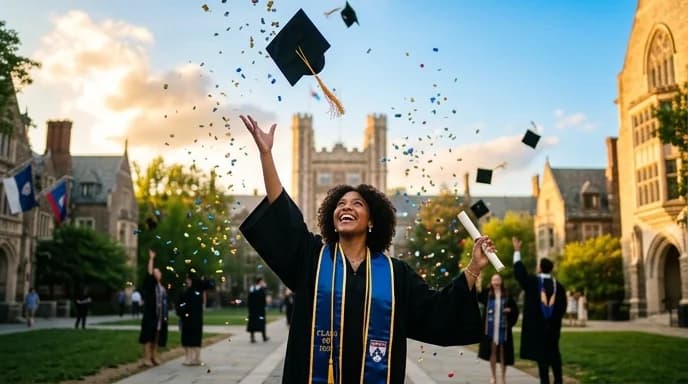
17. Cap Toss. Throw the cap in the air and photograph it mid-flight. Your photographer may need several takes — the timing is tricky but the result is dynamic and celebratory.
18. Holding the Cap Out. Hold the mortarboard at arm's length in front of you, as if presenting it to the viewer. It's a more modern take on the cap-and-gown photo.
19. Reading the Diploma (Staged). Unroll a diploma (or a prop scroll) and look at it with a proud smile. It tells the story without being literal about it.
20. Friends in Gowns. Line up with your closest friends, all in caps and gowns. Arms around each other. These group shots become some of the most treasured images years later.
Studio Details
21-25. Detail Shots. Your class ring on your hand. Your letterman jacket draped over a chair. Your honor cords and stoles laid flat. Your shoes (seniors invest in great shoes — document them). Your hands holding something meaningful — acceptance letter, team jersey, instrument case. These aren't portraits, but they round out a senior photo collection beautifully.
Outdoor Nature Poses (25 Ideas)
Outdoor sessions during golden hour produce the warmest, most flattering light for portraits. Parks, fields, forests, and waterfronts are all strong options.
26. Walking Through a Flower Field. Find a field with wildflowers or tall grass. Walk through it slowly while your photographer shoots from a low angle. The vegetation at the bottom of the frame adds color and depth.
27. Sitting on a Fallen Log. Natural and relaxed. Lean forward with your elbows on your knees or lean back with your hands behind you. The log gives you an organic "bench" in the middle of nature.
28. Standing at the Edge of a Lake. Your reflection in still water doubles the visual interest. Early morning or late evening when the water is calmest produces the best reflections.
29. Leaning Against a Tree. The tree trunk adds texture and anchors the composition. Stand with your back against it, one foot flat on the ground and the other knee bent with that foot against the trunk.
30. Backlit Through Trees. Stand with the sun behind you, filtered through tree leaves. The rim light creates a glowing outline, and the dappled light through leaves produces a dreamy, almost ethereal quality.
31. On a Trail. Walking away from the camera down a tree-lined path. The converging lines of the trail create depth that draws the eye straight to you.
32. In Tall Grass. Stand in waist-high grass so it fills the lower third of the frame. The grass adds movement (especially with wind) and natural texture.
33. Bridge Portrait. Wooden or iron footbridges make strong backdrops. Stand in the center with the railing leading toward you on both sides. The symmetry is visually powerful.
34. Sunrise / Sunset Silhouette. Stand facing the sun at the horizon. Your body becomes a dark silhouette against a sky of oranges and purples. It's dramatic and works at any body type.
35. Creek or Stream. Sit on rocks by a creek with your feet dangling toward the water. It's playful and casual. Bring a towel in case the rocks are wet.
36-40. Seasonal Backdrops. Cherry blossoms in spring. Green canopy in summer. Fall foliage in autumn. Snowy branches in winter. Seasonal elements date the photo to a specific time — which, for senior pictures, is exactly the point.
41-50. Action in Nature. Throwing leaves in the air (fall). Running through a sprinkler (summer). Twirling in a dress in a field. Climbing on a rock formation. Sitting on a pier with feet over the edge. Picking flowers. Playing with a dog on a trail. Flying a kite on a hilltop. Reading under a tree. Lying in a meadow looking up at the sky.

Urban Poses (25 Ideas)
Urban backgrounds add edge and energy. Brick walls, murals, fire escapes, parking garages, and downtown streets all work. The contrast between dressed-up senior and raw cityscape creates visual tension.
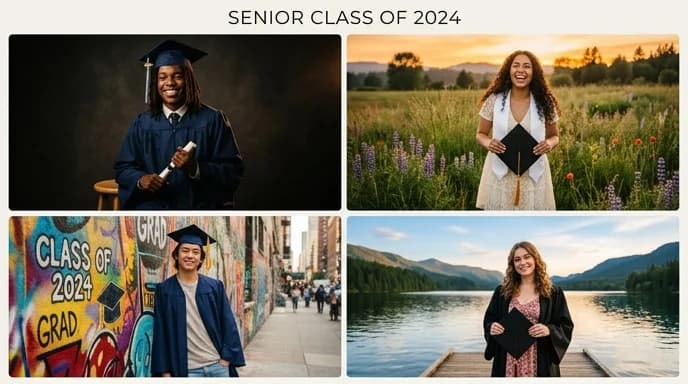
51. Graffiti Wall. Find a colorful mural or graffiti wall. Stand a few feet in front of it so the art goes slightly out of focus. The color adds pop without competing with your face.
52. Brick Alley. The texture and leading lines of a narrow alley create depth. Stand at the far end with the walls converging toward you, or lean against one side.
53. Staircase. Sit on concrete or metal stairs. The geometric lines contrast beautifully with the organic shapes of a human face and body. Mid-staircase, looking up at the camera, is a strong angle.
54. Rooftop. City skyline behind you. This requires access (ask your photographer about locations), but the elevated perspective and urban backdrop create a powerful, aspirational image.
55. Parking Garage. The concrete, painted lines, and fluorescent lighting give an edgy, raw aesthetic. Some photographers love garage light for its directional quality. This is the high-fashion approach to senior photos.
56. Coffee Shop Window. Sit inside a coffee shop by the window with natural light falling on your face. It's lifestyle photography — candid, warm, and relatable.
57. Crosswalk Mid-Stride. Crossing a street (safely, during a light change) with buildings on either side. The urban geometry frames you, and the movement creates energy.
58. Neon Signs. Stand near neon signs at dusk when the ambient light and neon are roughly balanced. The colored light adds a distinctive glow to one side of your face.
59. Fire Escape. Standing on or near a fire escape (if accessible and safe). The metal geometry creates a strong industrial frame.
60. Bus Stop or Train Station. The transit infrastructure — benches, signs, platforms — tells a story of going somewhere. It's metaphorically appropriate for a senior portrait.
61-65. Urban Details. Your reflection in a shop window. Your shadow cast long on a sidewalk at sunset. Your shoes on a grate. Your profile against a chain-link fence. Your hand on a door handle — about to open it, about to enter the next chapter.
66-75. Street Style Series. Walking with headphones on. Sitting on a curb with a skateboard. Standing in front of your car. Leaning on a bicycle. Posing with your favorite street food. Reading on a park bench downtown. Sitting on a fire hydrant. Standing under scaffolding. Window shopping at a vintage store. Exiting through a colorful doorway.
Sport and Activity Poses (25 Ideas)
If you play a sport or have a strong hobby, weave it into your session. These images capture who you are right now in a way that a standard portrait can't.
76. In Uniform on Your Field/Court. Full uniform, home field or court. This is the "official" sports senior portrait and it's worth having. Stand at midfield, sit on the bench, or lean on the goalpost.
77. Action Shot. Mid-swing, mid-kick, mid-jump. Your photographer shoots at high shutter speed (1/1000 or faster) to freeze the motion. The result shows you doing what you do best.
78. Jersey Over Shoulder. Casually drape your jersey over one shoulder, wearing street clothes underneath. It's the "I play this sport but I'm not defined by it" look.
79. Equipment Close-Up. Your cleats on the field. Your bow on the archery range. Your goggles on the pool deck. Your gloves on the mat. Detail shots that tell the story without showing your face.
80. With the Team. Group shot in uniform, or just your closest teammates. Arms around each other, looking like people who've been through battle together. Because you have.
81-85. Performing Arts. At the piano with dramatic side lighting. Holding your instrument in concert attire. On the stage under a spotlight. In your dance outfit mid-pose. At the mic in a recording studio.
86-90. Academic and Creative. In the science lab with goggles (actual ones, not a prop — your lab, your project). At an easel with a work in progress. In the robotics workshop with your build. At a computer with code on screen. With published writing or awards.
91-95. Vehicles and Machines. With your first car (this photo ages like wine). On a motorcycle. With a dirt bike or ATV. Sitting in a truck bed at sunset. On a tractor if you're from farm country — these photos become legendary.
96-100. Pets. With your dog in a field. Your cat on your lap at home. Your horse at the barn. Pets add genuine warmth and often produce the most natural smiles of any session. The candid moments between posed shots — when you're actually interacting with your animal — are gold.
Bonus: 10 Poses That Don't Fit a Category (But You Should Try)
101. Standing in the rain with an umbrella. 102. Lying on the ground, camera directly above. 103. Double exposure (your face merged with a landscape). 104. Film grain / vintage filter (real film if your photographer shoots it). 105. Black and white close-up, extreme detail. 106. With your family — parents, siblings, grandparents. 107. At your place of work. 108. In your childhood bedroom with posters and memories visible. 109. At the school entrance — where you walked in every day. 110. Holding a photo of yourself as a kindergartener.
Outfit and Styling Tips
- Solids photograph better than patterns. Busy patterns compete with your face for attention. Solid colors let you be the subject.
- Bring layers. A blazer over a t-shirt gives you two looks from one outfit. A jacket tied around your waist adds texture to a simple outfit.
- Avoid logos. Brand logos date a photo instantly and distract from your face. Plain clothing is timeless.
- Match your outfit to your setting. Formal for studio, casual for urban, flowy for nature, athletic for sports. The outfit should feel natural in the environment.
- Shoes matter more than you think. They'll be in more photos than you expect. Clean, intentional footwear completes the look.
Not sure how a specific outfit will photograph? Use the photo themes dashboard to test different style directions on your face before your shoot. It takes the guesswork out of wardrobe decisions.

How to Choose Your Photographer
The photographer matters more than the camera, the location, and your outfit combined. Here's what to evaluate:
- Look at their portfolio — specifically senior work. Wedding photographers, product photographers, and senior photographers are different specialties. Find someone whose senior portraits match the style you want.
- Ask about their editing style. Do they lean warm or cool? Do they heavily retouch skin? Do they deliver the images in color and black and white? Their editing style will define how your photos look forever.
- Check their turnaround time. Some photographers deliver in a week, others take months. If you need photos for yearbook deadlines or graduation invitations, timing matters.
- Ask about the number of deliverables. "How many final edited images will I receive?" is a critical question. Some packages include 20 images, others include 100. This affects value dramatically.
Average senior session pricing in 2026 ranges from $150-600 depending on your market, with most falling in the $200-400 range. This typically includes 1-2 hours of shooting and 20-50 edited images.
FAQ
When should I take my senior pictures?
Most seniors shoot between June and October of the year before graduation. This timing works for two reasons: you get the best outdoor light and weather, and you meet yearbook submission deadlines (which are typically in the fall). If you want fall foliage in your photos, schedule for late September or October. If you want a summer vibe, June or July. The key is booking your photographer early — popular senior photographers in your area fill up months in advance.
How many outfits should I bring to my senior session?
Three is the sweet spot. One formal or dressy outfit (for the classic portrait your parents want), one casual outfit (for the photos you actually want to post), and one that represents your identity — your sport, your hobby, your personal style. Changing outfits takes time, so more than three can feel rushed in a standard 1-2 hour session. If your photographer offers extended sessions, four outfits work. Bring options and let your photographer help you decide — they know what photographs well in their planned locations.
How much should I spend on senior pictures?
Budget $200-400 for a solid session with a dedicated senior portrait photographer. This typically gets you 1-2 hours of shooting, 2-3 locations, and 20-50 edited digital images. Below $150, you're likely working with someone very new. Above $500, you're paying for premium editing, album design, or luxury print products. The photos will be on display for decades — this is one area where quality is worth investing in. If budget is tight, the AI headshot generator can create polished portrait-style images from selfies for a fraction of the cost.
Can I use my phone for senior pictures?
Modern smartphones take excellent photos, but senior portraits benefit from a dedicated camera for three reasons: (1) a larger sensor captures more detail and better low-light performance during golden hour, (2) a portrait lens creates natural background blur (bokeh) that separates you from the background in a way phone software blur can't quite match, and (3) RAW files from a real camera give the photographer far more flexibility in editing. That said, a great photographer with an iPhone will outperform a mediocre photographer with a $5,000 camera. If your friend happens to be an excellent phone photographer, don't rule it out.